Wake up ready
Plug in at home and schedule charging around the hours your vehicle is parked.
HOME EV CHARGER INSTALLATION
Tell ChargeBrief about your home, parking, vehicle and energy setup once. We structure the details so suitable installers can start from the same useful information. See how much a home EV charger costs and what can change the quote.
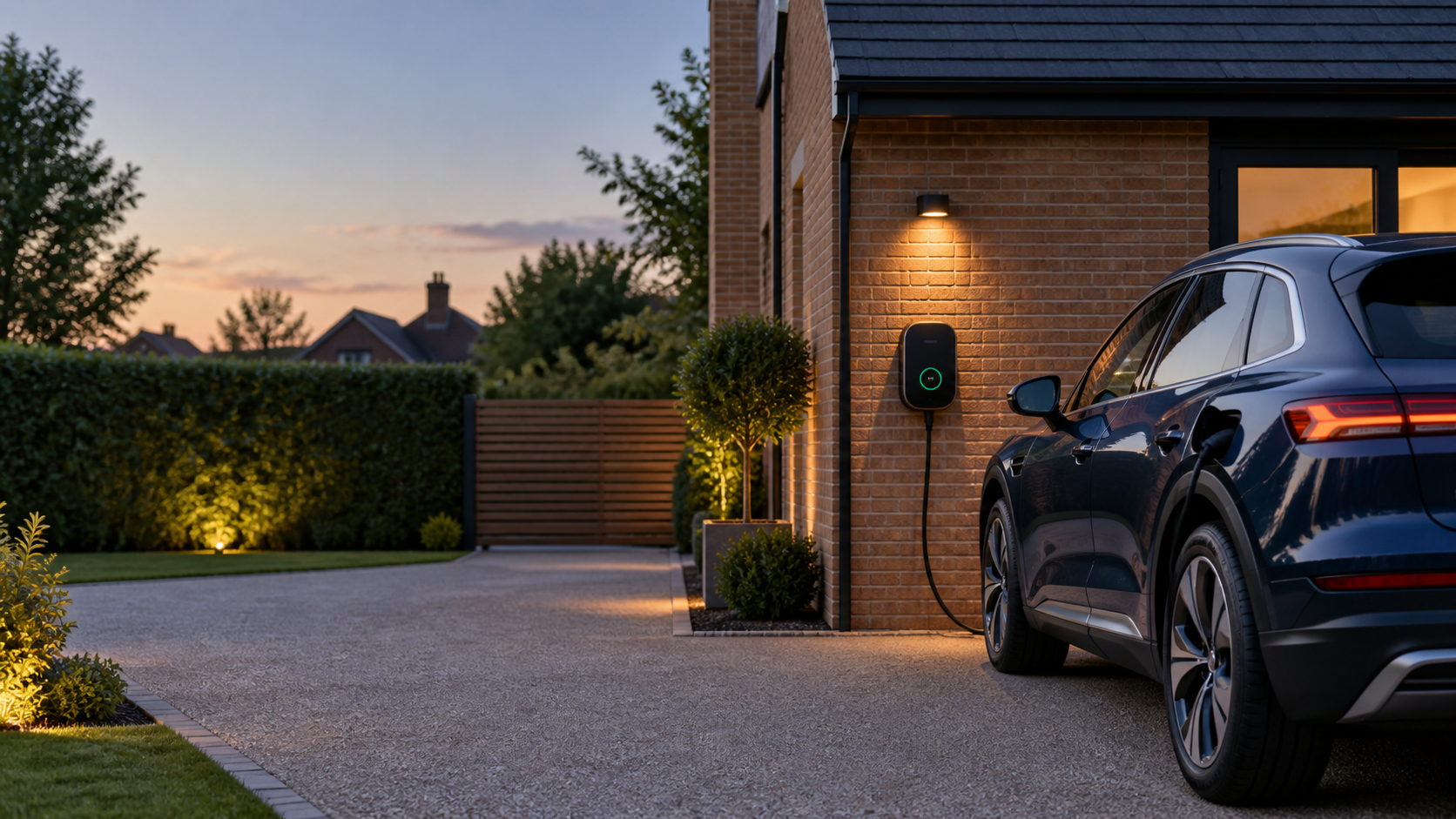
WHY CHARGE AT HOME?
Plug in at home and schedule charging around the hours your vehicle is parked.
A compatible smart charger can help you use off-peak electricity tariff periods.
Some chargers can work with solar panels, batteries and broader home-energy controls.
Depending on the model, monitor charging, schedule sessions and review energy use.
COMPARE THE FULL SCOPE
A low headline price is only useful when the scope is clear. Ask every installer to identify what is included and what could change after assessment.
FROM ENQUIRY TO INSTALLATION
Share the postcode, property, parking, vehicle and preferences.
An installer may request photos of the meter, consumer unit and cable route.
Review scope, assumptions, price, timing, warranty and support.
Contract directly with your preferred provider for survey and installation.
HOME CHARGING FAQs
ChargeBrief is an independent introduction service. The chosen installer remains responsible for the survey, design, quotation and work.
Start my home enquiry →The final price depends on the charger, cable route, electrical protection, consumer-unit condition and any non-standard work. ChargeBrief asks for the details that help installers provide comparable starting quotes.
This varies by installer. A clear quotation should state its cable allowance, mounting, electrical protection, testing, commissioning, app setup, warranty and VAT. Always compare written inclusions rather than relying on a headline price.
A home EV charger is normally installed on a dedicated circuit with suitable protection. The chosen installer must assess the property and confirm the safe design under current requirements.
Tethered units are convenient because the cable remains attached. Untethered units can look tidier and let you replace or store the cable separately. Your parking position and daily routine usually make the decision clearer.
Some chargers can prioritise surplus solar or blend it with grid electricity. Share the inverter, battery and tariff details with the installer so compatibility and monitoring can be checked.
Street and shared-parking installations involve property boundaries, permissions and highway rules. Do not trail a cable across a public pavement. A suitably experienced provider can explain whether an approved local solution may be possible.
READY TO START?
It takes about three minutes. There is no charge and no obligation to proceed.